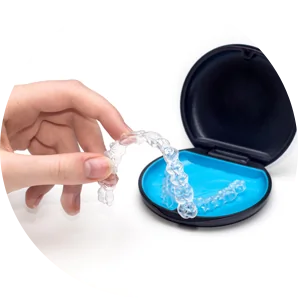
Invisalign clear aligners offer a discreet way to straighten suitable smiles without fixed metal braces. At The Grove Dental Care in Palmers Green, we assess your teeth, bite and oral health carefully before explaining whether aligner treatment is appropriate for you.
Invisalign treatment in Palmers Green
Invisalign treatment uses a planned series of custom-made, removable clear aligners. Each aligner applies controlled pressure to guide selected teeth towards their planned positions. Aligners are designed to be worn for most of the day and are removed for eating, drinking anything other than water, brushing and flossing.
Clear aligners can be used for many common alignment concerns, including some crowded teeth, spacing and bite problems. They are not the right option for every patient or every tooth movement. A full clinical assessment is needed before treatment can be recommended.
What happens at an Invisalign consultation?
We begin by asking what you would like to change about your smile. Your dentist will examine your teeth and gums, assess your bite and review your dental and medical history. Photographs, radiographs or a digital scan may be recommended where clinically appropriate.
If aligners are suitable, a personalised plan can be prepared. We will explain the proposed tooth movements, expected responsibilities, likely treatment stages, limitations, retention and costs. Any active decay or gum problems normally need to be addressed before orthodontic treatment starts.
How clear-aligner treatment works
- Assessment and records: your oral health, teeth and bite are evaluated and the records needed for planning are taken.
- Digital planning: your proposed treatment is planned and reviewed before aligners are ordered.
- Wearing your aligners: you follow the prescribed wear schedule and change aligners as directed.
- Progress reviews: your dentist checks tooth movement and oral health during treatment.
- Retention: retainers are normally required after active treatment to help maintain the result.
Benefits and responsibilities
- Clear aligners are discreet when worn.
- They can be removed for meals and oral hygiene.
- Digital planning helps explain the intended tooth movements.
- Successful treatment depends on wearing the aligners as instructed.
- Good cleaning, sensible eating habits and regular reviews remain essential.
Some patients may need small tooth-coloured attachments, space creation or refinement aligners. Temporary tenderness, changes in speech or increased saliva can occur when starting a new aligner. Risks and limitations relevant to your own treatment will be explained before you consent.
How long does Invisalign take?
Treatment time varies according to the complexity of the tooth movements, your response to treatment and how consistently the aligners are worn. A reliable individual estimate can only be given after assessment and treatment planning.
Invisalign fees and appointments
The cost depends on the complexity and length of treatment and the number of aligners required. We will provide a personalised written estimate before treatment begins. You can view our dental fees or contact the practice to discuss arranging an assessment.
To arrange a private Invisalign assessment, use the online booking link below or call the practice on 020 8882 8887.
Frequently asked questions about Invisalign
How many hours a day should aligners be worn?
Your dentist will give you a specific wear schedule. Aligners generally need to be worn for most of the day and night, removing them only for meals, drinks other than water and cleaning.
Can I eat while wearing aligners?
Aligners should normally be removed for eating. Clean your teeth before replacing them where possible, and follow the care instructions provided for your aligners.
Will I need retainers afterwards?
Retainers are normally required after orthodontic treatment because teeth can move over time. We will explain the recommended retention plan and ongoing care.
How do I find out if I am suitable?
Book a private examination or call 020 8882 8887. Suitability can only be confirmed after your teeth, gums and bite have been assessed.